Britain ranks crypto its third economic crime priority, and added one arrest
The NECC's annual report warns of innovative laundering at scale. Operation Destabilise, its flagship cash-to-crypto case, has gone from 128 arrests to 129 since November.
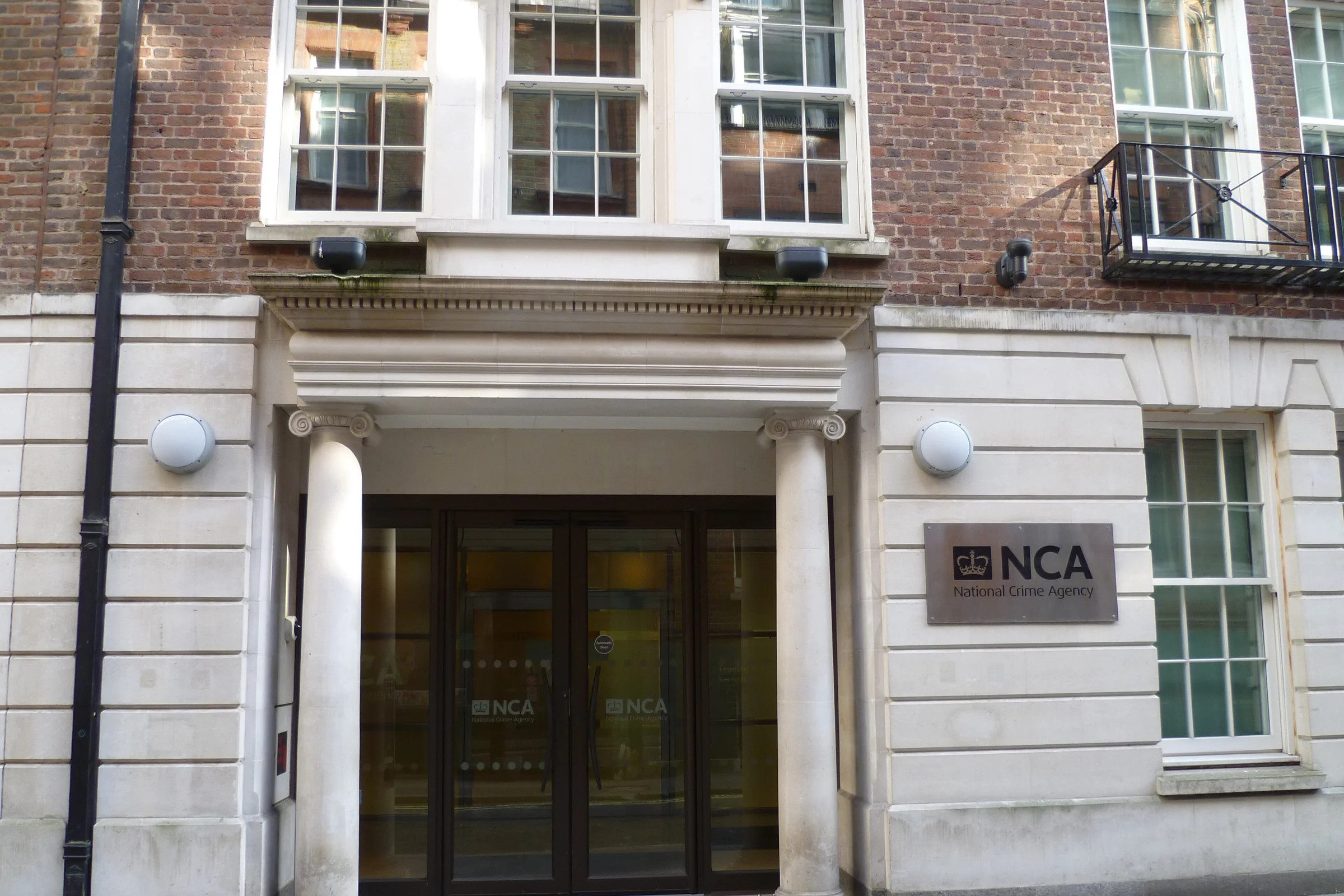
Criminals are making "innovative use of crypto asset products to evade detection and move illicit value at scale," Britain's National Economic Crime Centre said in its annual report, published this week. Cryptoassets now rank third among the nine economic crime priorities the NECC agreed with the Financial Conduct Authority, the Home Office and the Treasury in July 2025, above criminal cash and money mules. Only professional enablers and politically exposed persons rank higher.
Underneath the ranking sits a number worth a moment.
Operation Destabilise, the agency's flagship case against Russian-speaking networks turning street cash into crypto, has now reached 129 arrests and more than £25 million seized in the UK. In November it stood at 128.
One arrest, in roughly ten months, from the operation that is the whole of Britain's public record on this.

UK Crime Agency Warns of 'Innovative Use' of Crypto by Launderers
t.co/y98MRQTNkC
Set the seizure total against the NCA's own estimate that over £100 billion is laundered through the UK every year and you get roughly 0.025 percent of a single year's flow, recovered over four years of work. We are not being clever at the agency's expense. Money laundering enforcement everywhere produces ratios like this, and anyone who quotes a national seizure figure without a denominator is selling something. But a threat assessment that promotes crypto to third place should be read next to the number the same agency publishes about what it recovers.
What is the report actually asking for? Money, more or less, and the language says so. The NECC writes that it is developing "a more proactive and intelligence-led crypto capability to inform our response to cross-cutting priorities," with no detail on what that means in practice. Translated, the agency wants to generate its own targets rather than work referrals from exchanges and analytics firms. A real ambition, and an expensive one, since it probably means paying for the tracing that Chainalysis, Elliptic and TRM currently do for free in exchange for being cited (the citation is the invoice).
The operational example the report leans on is Operation Atlantic, a week-long sprint at NCA headquarters in March with the US Secret Service, Coinbase, Binance, Kraken and Tether, which identified 20,000 approval-phishing victims and froze $12 million. That works out at about $600 a victim. And it is exactly the model the NECC says it wants to move beyond, since the companies in the room are the ones holding the data.
And here is the part we enjoyed most, because it is the report arguing with itself. Among its academic work the NECC lists a Royal United Services Institute paper on privacy-enhancing technologies in the crypto industry, drawn from a July 2025 roundtable the NECC itself hosted. The paper argues against banning privacy tools. Participants said several times that prohibition would push illicit actors onto unregulated services and leave investigators with fewer firms to ask. Its author, Allison Owen, told Decrypt that building trust through compliance features "will ultimately expand the use of the technology."
So the annual report that warns about innovative evasion also cites, approvingly, the case against the obvious response to it. Good. That is what an evidence base is for.
One housekeeping note. Decrypt reports these lines as the NECC's annual report and Crypto Briefing attributes the same "innovative" language to the NCA's 2026 National Strategic Assessment. Those are likely different documents from the same building (the wording travels), which is worth knowing if you are citing either.
Our read is that the third-place ranking is a budget position rather than a change in tactics, and that the next twelve months will produce capability announcements rather than case outcomes. We would expect no new named UK crypto operation with more than 20 arrests before the 2027 report. If one lands, the in-house intelligence build worked faster than any of us thought, and we will say so.
The report also places AI beside crypto in the same passage, citing synthetic identities and process automation used against banks.
Watch which of those two gets the money.
Sources
Show all 12 sources
LAPTOP peaked at $190.81 two minutes after launch, on $48,000 of liquidity. The design did the rest
Hunter Biden's memecoin printed a $144 billion valuation against a pool smaller than a house deposit, then lost 99 percent inside an hour. He says nobody on his side sold. The tokenomics say nobody on his side could.
Continue ↓