Block's proposed bank has no branches, no deposits and no Jack Dorsey
Builders Bank & Trust would swap more than 50 state money transmitter licenses for one federal charter, and Dorsey appears in the filing only as a co-founder.
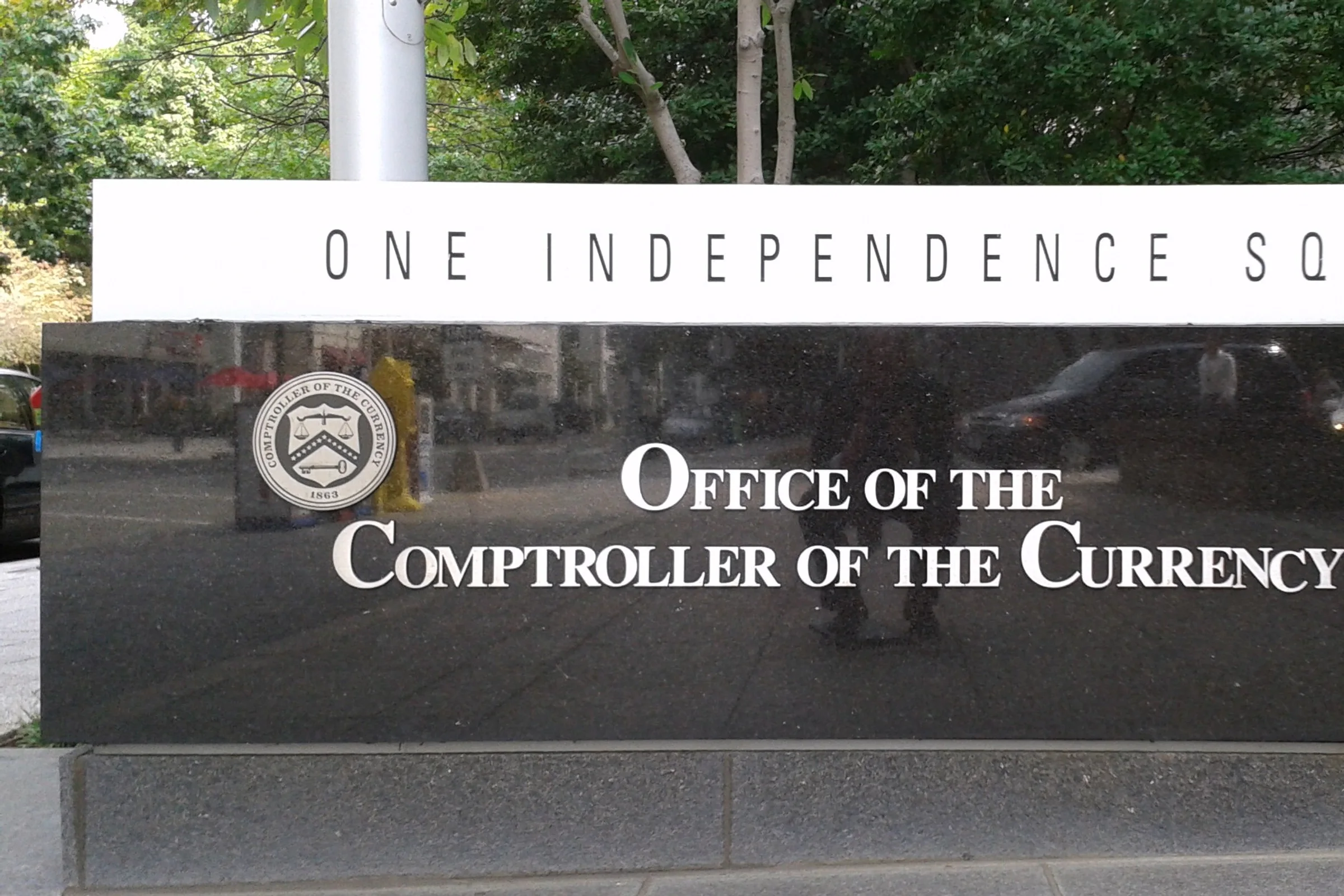
Block applied to the Office of the Comptroller of the Currency for a national trust bank charter, the company said on Tuesday September 8.
Builders Bank & Trust would be uninsured and non-depository. It takes no deposits, makes no loans, and exists to custody bitcoin and other digital assets, execute customer orders on a riskless principal basis, and settle stablecoins.
Every headline attached Jack Dorsey's name to it.
The filing does not. Dorsey is not among the organizers, the directors or the senior executives, and appears only as Block's co-founder. The chair and chief executive would be Lee Woolley, Block's digital asset strategy lead, previously of Northern Trust and BNY Mellon (two custodians, which is the tell about what this bank is for).
There is a better detail than that one. Builders Bank would be headquartered in Sioux Falls, South Dakota, with no branches, and all five proposed directors live somewhere else. Block has asked the OCC to waive the rule requiring one of them to live within 100 miles of the bank.
A national bank whose board cannot get to it in under two hours. (South Dakota is where trust charters go for the trust law, not the weather.)

LATEST: Jack Dorsey's Block files for a national trust bank charter, joining Coinbase, Ripple and Circle in seeking OCC approval to custody $BTC and stablecoins. t.co/wBEHG6EVCh

Strip the vocabulary and this is a licensing trade. Block has run digital asset services for about eight years under more than 50 state money transmitter and virtual currency licenses, moving roughly $10.7 billion of bitcoin volume in 2025 and serving about two million monthly crypto users through Cash App by the second quarter. Fifty-plus examinations, fifty-plus renewal calendars, fifty-plus interpretations of the same activity. One federal charter replaces the lot, and if you have ever watched a payments company staff a state-licensing team you know what that is worth. Block's own words are that it wants "a consistent national framework as the business scales," which is what a compliance officer says when they mean the map is the problem.
So how hard is this to get? Harder than nothing and easier than the coverage implies. The Block reports that since 2025 the OCC has received 40 de novo charter applications, approved 21 and denied two. Twenty-three decided, then, and a 91 percent approval rate among them, with 17 still in the queue (the OCC does not say how many of those are crypto firms). The one public denial this year was Wise National Trust, in July.
Which makes the charter less a seal of approval than a place in line.
The honest case against our reading comes from Senator Elizabeth Warren, who wrote to the Comptroller in May arguing that the OCC lacks authority to grant trust charters to firms that do not perform traditional fiduciary work. She has a textual point. In April the agency amended its chartering rule to cover "operations of a trust company and activities related thereto" rather than "fiduciary activities" — the exact wording Block's application leans on — while saying the change neither expands nor contracts its authority. Read that sentence again and decide whether you believe it. We would say the rewrite is doing work, and that it will be litigated by somebody eventually, and that this queue will have cleared long before it is.
Our read is that Builders Bank gets conditional approval within nine months, and that the real risk to the pipeline is political rather than prudential. The Trump-linked World Liberty Financial is sitting in the same list as Morgan Stanley, Kraken's Payward and Zerohash, and a charter regime that approves 91 percent of what it decides will eventually approve something that makes the whole regime a campaign issue. A denial of a large, well-capitalized applicant on fiduciary-purpose grounds would tell us the OCC is drawing a line we cannot currently see.
One last thing, offered without comment. The bank will settle stablecoins, and Dorsey has said publicly that he does not much like stablecoins and would rather build on Bitcoin. Filed on September 4, announced on September 8. Somebody won an argument in between.
Sources
Show all 10 sources
LAPTOP peaked at $190.81 two minutes after launch, on $48,000 of liquidity. The design did the rest
Hunter Biden's memecoin printed a $144 billion valuation against a pool smaller than a house deposit, then lost 99 percent inside an hour. He says nobody on his side sold. The tokenomics say nobody on his side could.
Continue ↓