GLM 5.3 reaches Ollama cloud-only, while antirez runs it at Q2 on two Macs
Ollama's library lists no downloadable tag for a 753B open-weights model, and the people still running it locally are doing it at two bits across machines.
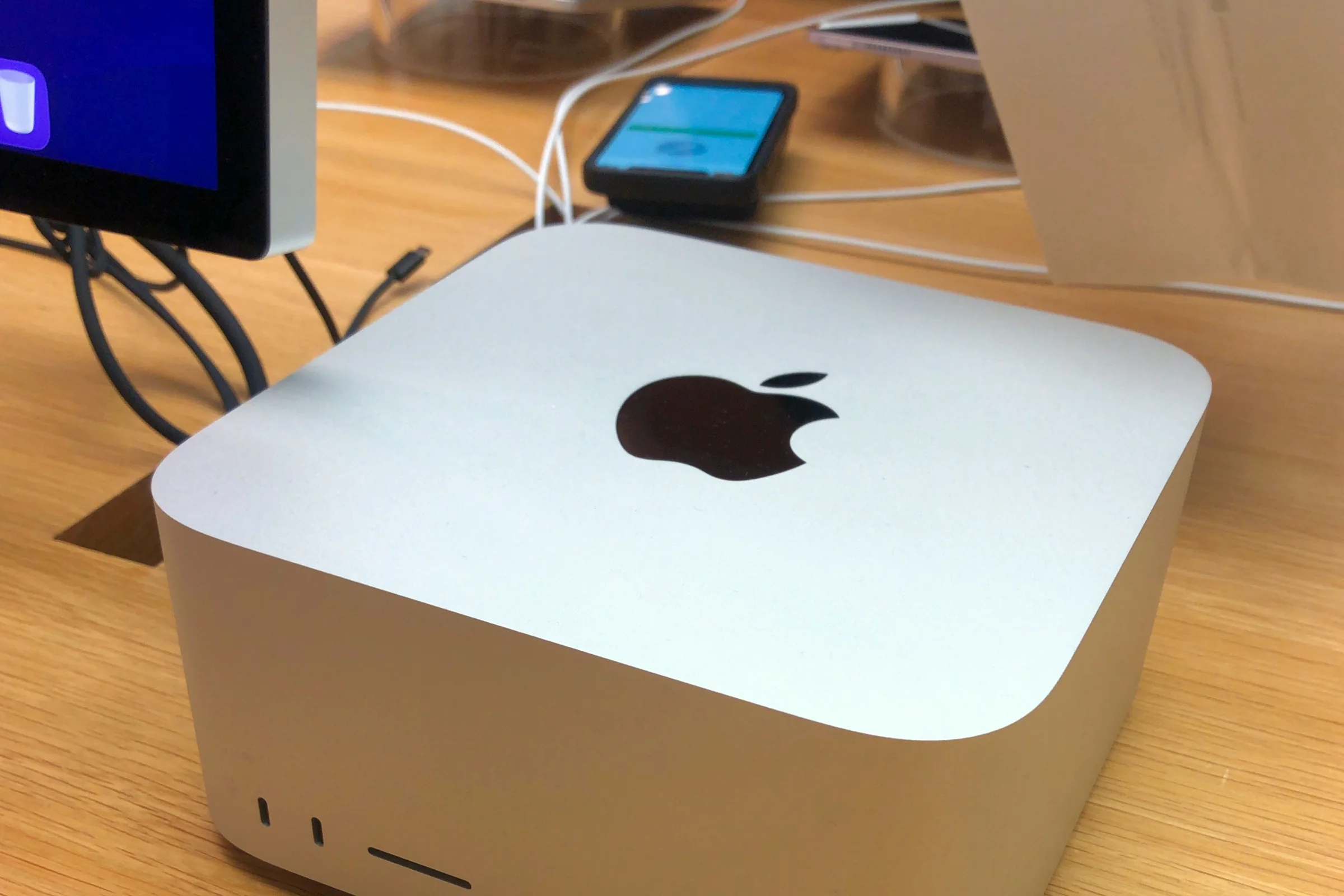
Ollama finished rolling out GLM 5.3 and GLM 5.3 Flash on August 29th. Both models exist in its library under exactly one tag each, glm-5.3:cloud and glm-5.3-flash:cloud, and the size column on both pages is a dash.

GLM 5.3 and GLM 5.3 Flash (previously Ox Alpha) are fully rolled out on Ollama's cloud.
Private.
Fast.
US and Europe hosted.
Zero data retention.
GLM 5.3:
ollama launch claude --model glm-5.3:cloud
GLM 5.3 Flash:
ollama launch opencode --model glm-5.3-flash:cloud
Works with many more harnesses, or create an API key and plug it straight into your own app.
Which harness should we add next?

There is no local build.
Not a big one, not a quantised one, not a 4-bit one for people with a great deal of unified memory. For a company whose reason to exist was ollama run on your own machine, that is a quiet and fairly large change, and it is worth being specific about why it happened rather than treating it as a betrayal.
The why is arithmetic (ours, not theirs — Ollama publishes the parameter count and leaves you to it). Ollama's own page puts GLM 5.3 at 753B parameters with a 1M context window. Four bits a weight gives you a file somewhere near 376 GB before a single token of KV cache; two bits gets you to roughly 188 GB. GLM 5.3 Flash is smaller at 321B total with 18B active, which is the version a well-funded desk can actually hold, and Ollama does not offer that locally either.
So who is still doing this on their own hardware? Salvatore Sanfilippo (antirez, of Redis), for one.

I ran an extensive benchmark against DeepSeek v4 Flash and GLM 5.3 Flash Q2, Q4 and mixed quants. Those are the results obtained. Mix of (hard-ish) benchmarks on cybersecurity, math, QA, ... t.co/43Kjoh2TmD

On September 3rd he published results from an extensive benchmark of quantised local runs — a mix of cybersecurity, maths and QA tasks, twelve per model, with reruns. The row that tells you where consumer inference has got to is labelled "GLM 5.3 Q4, two-Mac TP": a Q4 quantisation, tensor-parallel across two machines, 8 of 12 on a 4K greedy baseline and 10 of 12 after reruns. GLM 5.3 at Q2 managed 8 then 9.
Across everything he ran, completion went from 43 of 72 to 56 of 72 strict, or 57 counting a DeepSeek answer he calls "mathematically correct but incorrectly formatted". His note on what is still failing is the useful part for anyone tempted to try this: "The remaining failures are predominantly long Olympiad proofs that identify promising or correct results but never emit a final answer." Not wrong answers. No answer at all.
And one result cuts against the obvious advice. "Sampling substantially improved DeepSeek, but GLM Q2's greedy 16K run scored 10/12 versus 9/12 using normal sampling." If you are running a heavily quantised model, the sampling settings that help one model can cost you on another, which is a nuisance and not a headline anywhere.
Our read is that Ollama has become an inference reseller at the top of its own catalogue, and it has not said so. The pricing page is candid enough — $1.40 per million input tokens and $4.40 output for GLM 5.3, against $0.15 and $0.50 for Flash, a factor of nine either way — and the zero-data-retention, US-and-Europe hosting language is the language of a vendor, not a runtime. That is a reasonable business.
It is also a different product from the one the name sells. Every launch command on the page carries a :cloud suffix, and the only warning that your tokens are leaving the building is a dash in a size column (and, to be fair, a readme paragraph about zero data retention).
We would expect no local tag for glm-5.3 before the end of 2026. A downloadable Q4 build appearing in the library would prove us wrong, and we would be pleased about it.
The counter-argument is straightforward and largely right: a 753B model is not consumer hardware, no packaging decision changes that, and offering it as a cloud endpoint next to local models is more honest than pretending a laptop can hold it. Fair. But Flash is 18B active, and 321B total quantises to about 160 GB at four bits.
Somebody could ship that.
What would you rather have, a dash in the size column or a 160 GB download you probably cannot run? We would take the download, and antirez has just shown what you can do with one.
Sources
Show all 8 sources
DigitalOcean puts $3m into Omarchy, taking DHH's foundation to $18.5m in 19 days
A Linux distribution built mostly by agents is now funded by the cloud and the labs whose products it burns.
Continue ↓